Long-standing cooperation: Bellows for KVG
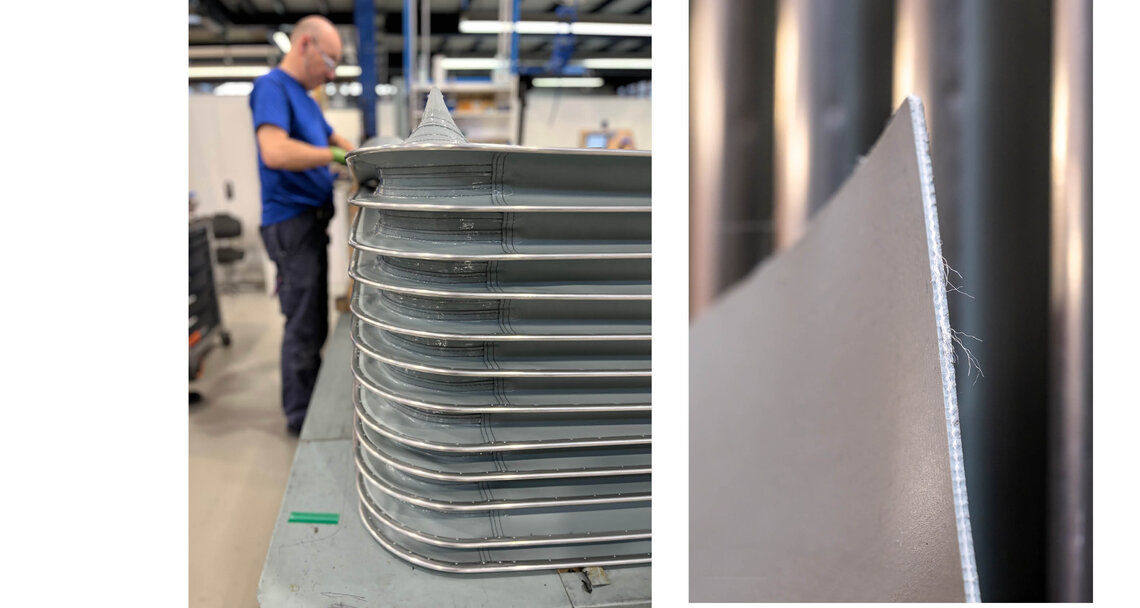
This is made possible by the good cooperation with the Kasseler Verkehrs-Gesellschaft (KVG) for many years, which is equipping a tram that has been used for many years with the bellows as part of a complete refurbishment. This consists of high-strength, sustainable materials that have been specially developed for use in rail transport.
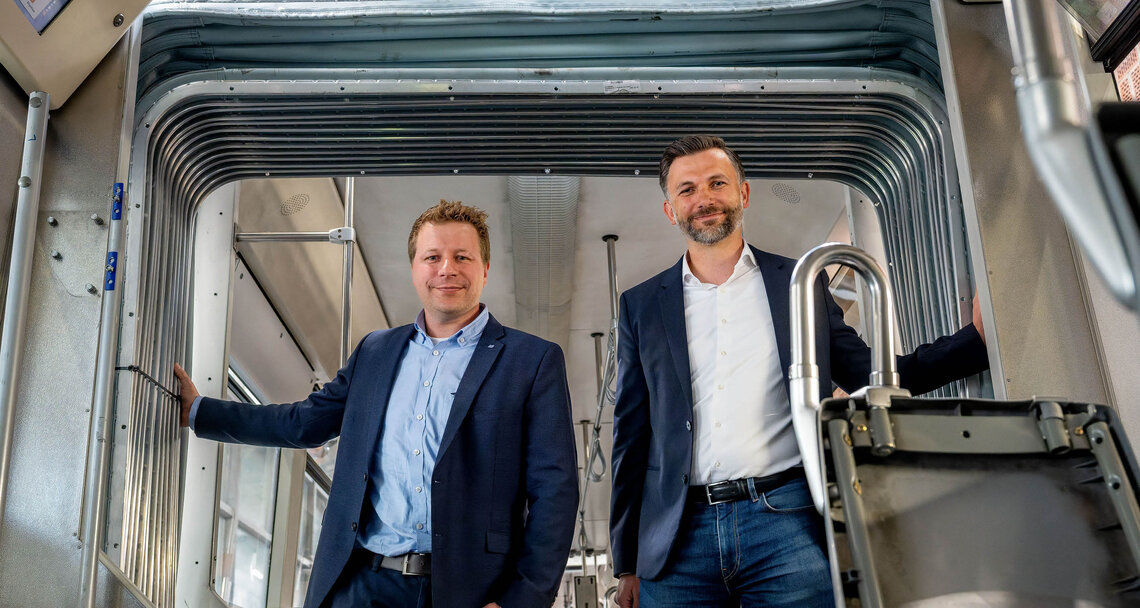
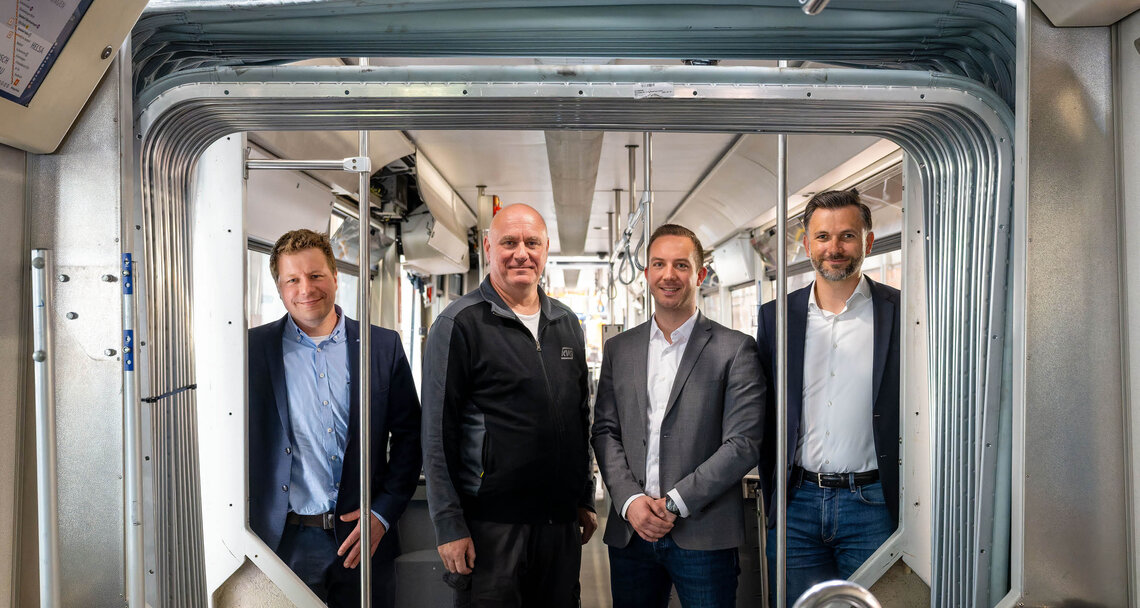
“Sustainability is more than just a trend for us – we want to actively change the mobility industry with our solutions and bring resource-saving innovations to the market,” says Timm Kohberger, Site Manager Gangway Systems at HÜBNER Kassel. “With the use of HÜBNER EcoTex, we are making a contribution to the environmentally friendly modernization of a tram. Above all, however, we are very grateful to KVG for providing us with valuable insights into how the newly developed fabric proves itself in daily use and what further improvements are possible.”
New solutions for attractive mobility in Kassel
As part of a comprehensive repair, KVG is equipping a tram that has been in use for many years with the new bellows. The use in a modernised existing vehicle shows how consistently KVG relies on sustainable solutions – not only through new procurements, but also through the resource-saving refurbishment of its fleet.
Christian Oehm, Deputy Head of Vehicles at KVG, emphasizes: “We are working on improving public transport with new solutions and thus contributing to an attractive mobility offer in Kassel. The good and trusting partnership with HÜBNER is an important building block in achieving this goal.”
CO2 footprint reduced by up to 45 percent
One advantage of the newly developed EcoTex bellows fabric is a significant reduction in the ecological footprint. Compared to conventional bellows materials, carbon dioxide (CO2) emissions can be reduced by up to 45 percent during production – and all this without the use of solvents. The sustainable materials are designed as an equivalent substitute for conventional fabrics and meet the same technical and functional requirements.
The fabric made of recycled fishing net nylon also contributes to strengthening the idea of the circular economy. The HÜBNER Group also pursues the approach of reusing as many parts and components as possible in the refurbishment of gangway systems. This not only conserves resources, but also allows transport companies to save costs.
Premiere 2024: Recycled fishing nets in the gangway system
The HÜBNER Group presented a gangway system that contains fabric made of fully recycled nylon from fishing nets and sustainable raw materials based on cellulose or viscose for the first time at the leading trade fair InnoTrans 2024. There, the innovation met with great interest from an international trade audience.
New developments for more sustainability in public transport have been part of the company’s strategy for some time now. The HÜBNER Group is not only committed to this with innovations.
Active participation in the “Railsponsible” network
One example is the “Railsponsible” network, in which companies in the European rail industry exchange ideas. Here, the HÜBNER Group is working together with other companies to strengthen sustainability in the supply chain of the rail transport industry. The aim is to improve environmental, social and ethical standards through common standards, supplier assessments and the exchange of best practices.
The next milestone is now being reached with the practical use of the gangway system with fabrics made from recycled fishing nets and sustainable raw materials at KVG. “This special bellows is intended to make clear what we are striving for now and in the future: We want to make our contribution so that our customers can improve their ecological footprint with our products and services,” emphasizes Timm Kohberger.