Validation:
Test procedures for
gangway systems

Overview of test procedures

Depending on the project scope, the following test may be applied:

CAD-based motion analyses are performed at an early stage to assess technical feasibility. Customer-defined movement positions are simulated, analyzed and documented using a 3D motion model.

The gangway system is installed in accordance with HÜBNER drawings and tested based on a test program that has been agreed with the customer. The simulated vehicle positions reflect real track conditions.

The following aspects are evaluated:

  • Clearance of components
  • Unacceptable deformations
  • Excessive noise generation
  • Damage to components
  • Formation of unacceptable gaps
  • Potential risks to passengers

Applicable standard: EN 16286-1, Section 9.2

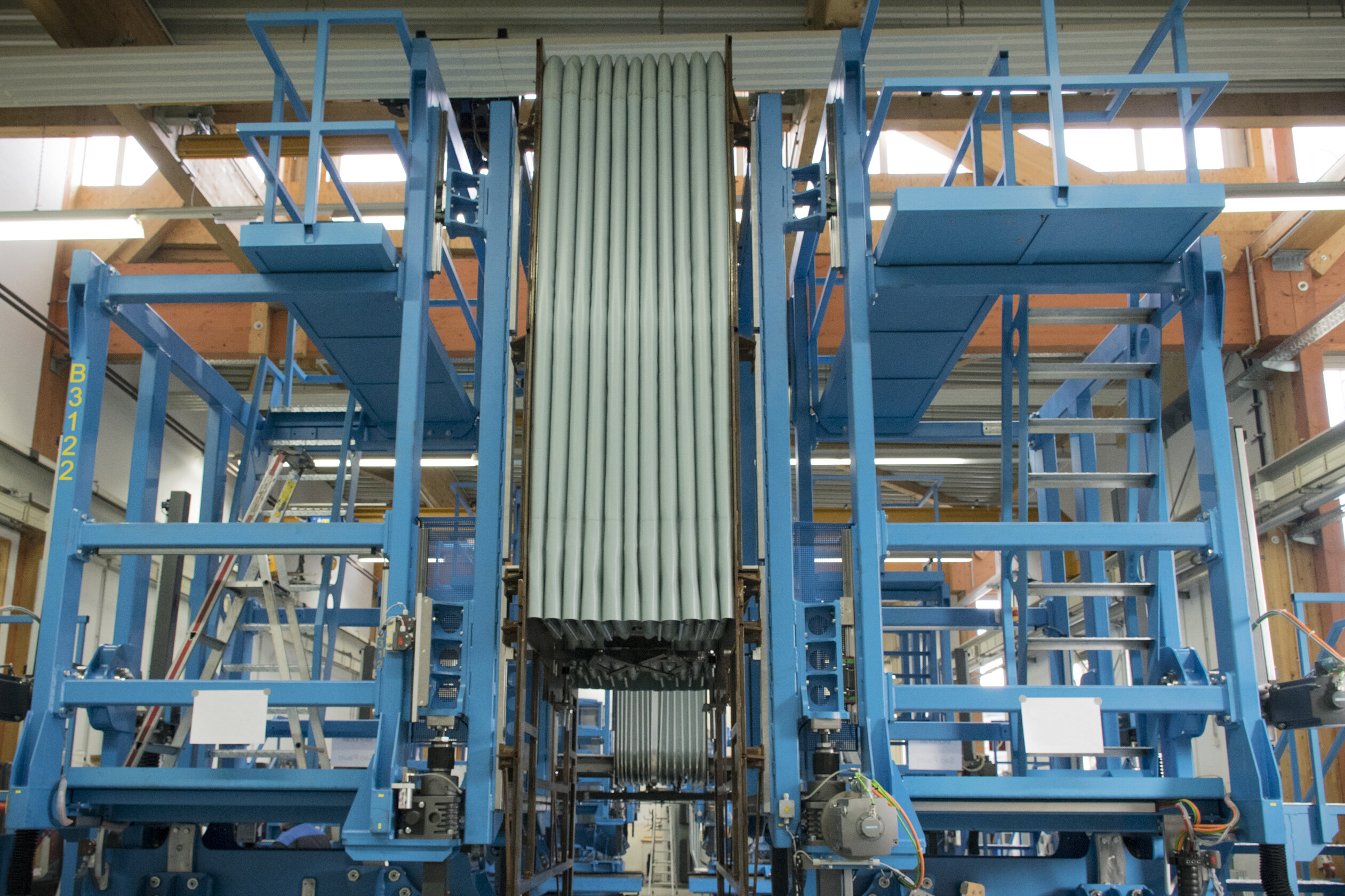
Endurance testing simulates the agreed service life of the gangway system. The defined movement sequences are repeated cyclically to evaluate functionality, wear and fatigue strength. If required, real route movements can be measured in advance and integrated into the test program.

Applicable standard: EN 16286-1, Section 9.7, Annex C.

Pressure resistance and tightness are tested by installing the gangway system in a dedicated pressure test rig. Overpressure and underpressure conditions – such as those encountered during vehicle passage through tunnels – are simulated. After pressure release, the test assesses for permanent deformation, damages and, if requested, pressure loss.

Applicable standard: EN 16286-1, Sections 7.5.4 and 9.4.

The gangway system is installed in a water test rig and exposed to a defined water volume. The objective is to verify sealing performance under relevant environmental conditions.

Applicable standard: EN 16286-1, Section 9.5

Load testing verifies the mechanical stiffness of the system. Depending on requirements, either the complete gangway system or individual components (such as bellows, bridge or interior paneling) are tested.

Applicable standard: EN 16286-1, Section 7.5

Acoustic testing is used to determine the airborne sound insulation properties of gangway systems. In accordance with drawings, the system is installed in a dedicated acoustic test rig. Measurements are carried out in compliance with EN 16286-2 and EN ISO 10140-2.

Additional verification is provided through FEM analyses and computational evaluations, including for:

  • Strength verification of bridge systems
  • Bolt dimensioning
  • Weight calculations
  • Thermal insulation performance

Relevant standards: VDI 2230, EN 12663.

The HÜBNER Group complies with the requirements of EN 45545 and other international fire safety standards. All materials used in gangway systems are regularly tested and certified. Project-specific documentation is provided as required. Additional fire barrier testing (burn-through behavior) can be conducted via external, customer-specific test setups.

Relevant standards: EN 45545-3, EN 1363-1.

In the missile impact test, a defined projectile is fired at a specified area of the gangway system at an agreed velocity. Objective of the test is to demonstrate that a potential foreign object will not be able to penetrate the system.

Applicable standard: GM/RT 2100.

Aerodynamic performance is evaluated using a test specimen that replicates the external contour of the gangway system. This test is particularly relevant for high-speed and mainline rail applications.

Whether for trams, metro systems, regional trains or high-speed rail vehicles:

HÜBNER offers a scalable testing portfolio for maximum safety and predictability and minimum project risk. Our validation expertise provides the foundation for reliable gangway system operation – throughout the entire product life cycle.
Contact

Maximilian Schäfer

Head of Sales BU Gangways | Mobility Rail
Tel. +49 561 998 1679
​​​​​​​Maximilian.Schaefer(@)hubner-group.com