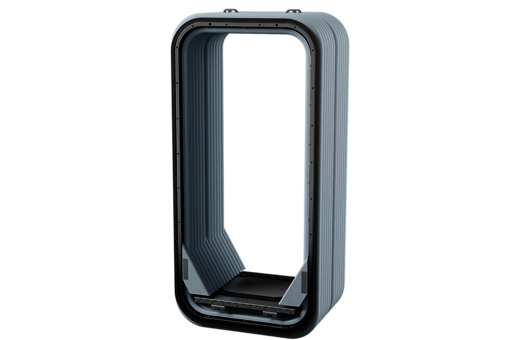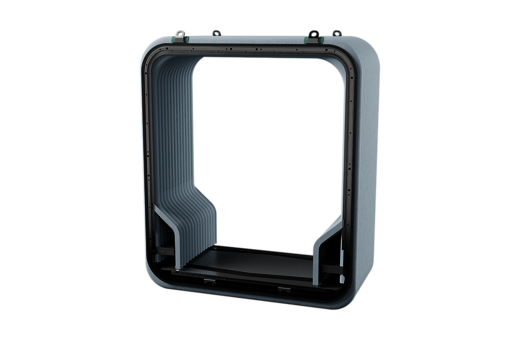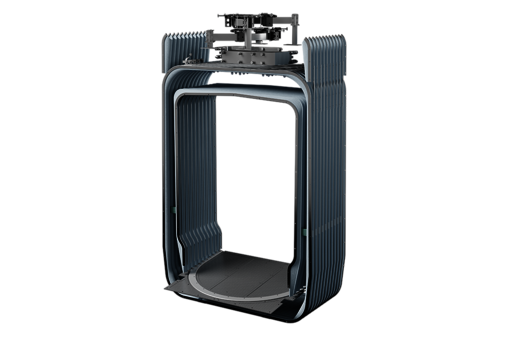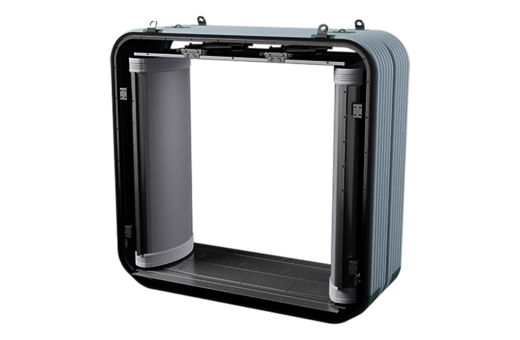
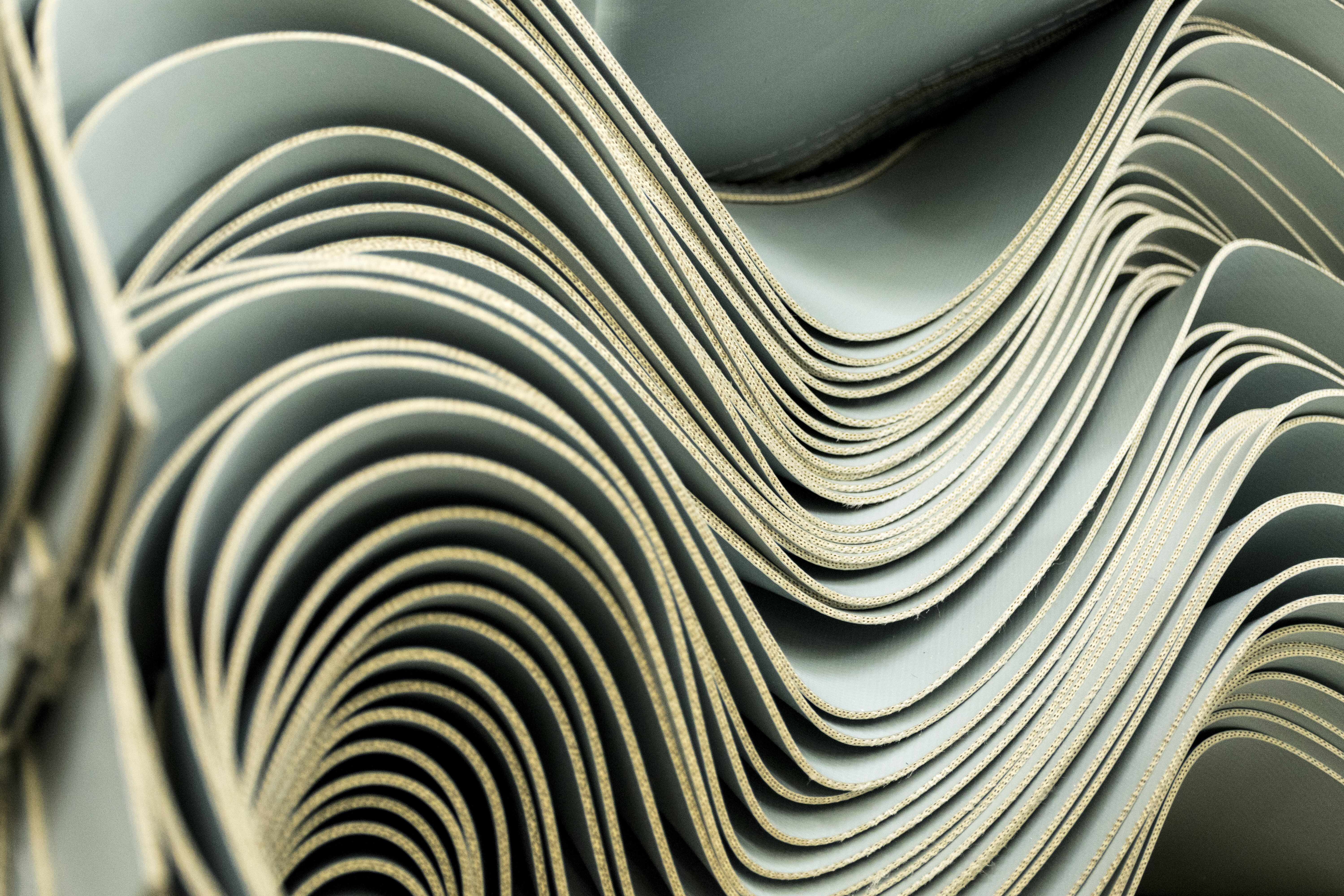
Elastomer-coated fabrics provide the functional basis for folding and corrugated bellows. With more than 50 years of experience in developing the key materials for these applications, the HÜBNER Group brings together extensive expertise in rubber technology, textiles and coating processes.
Material expertise & development know-how
HÜBNER develops a wide range of prototypes In the company’s in-house technical center. These undergo extensive testing in the HÜBNER materials laboratory and then are scaled up for series production – always with the clear objective of delivering durable, safe and sustainable materials for global use in rail and road transport.
Fabric materials are individually developed and selected depending on the particular vehicle type, operating conditions, and technical specifications.
Whether customers prefer more economical single corrugated bellows with a lightweight construction or double-corrugated bellows with enhanced sound insulation, each bellows material solution is tailored exactly to specific customer needs. All of the materials used in HÜBNER bellows are distinguished by their high quality, excellent physical properties, and compliance with international standards.
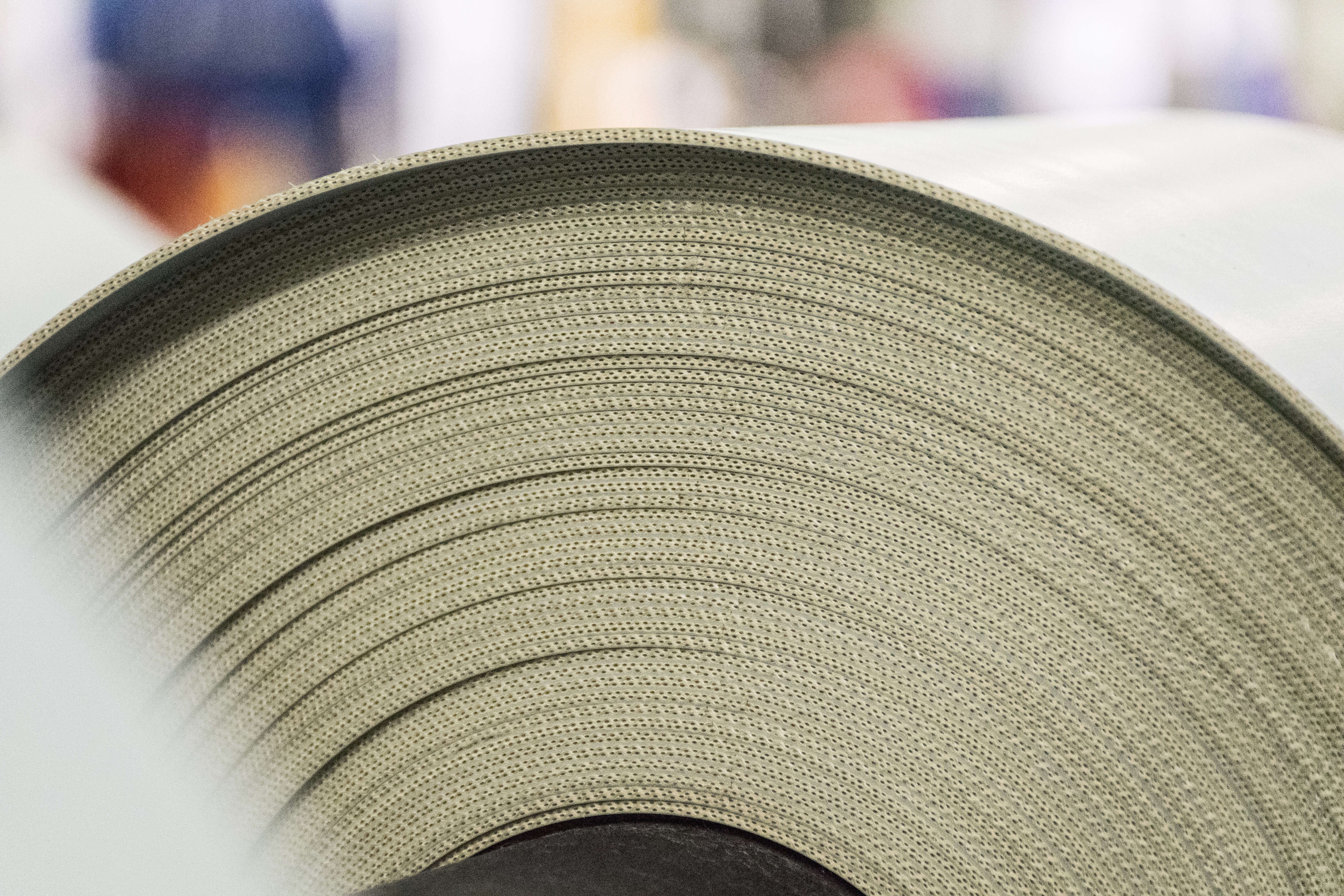
Fire protection & safety standards
All materials comply with international fire safety requirements for rail vehicles, including:
- EN 45545-2, R1/R7 – HL1, HL2, HL3
- NFPA 130 (USA)
- BS 6853 (British Standard)
An innovative and sustainable gangway fabric: HÜBNER EcoTex
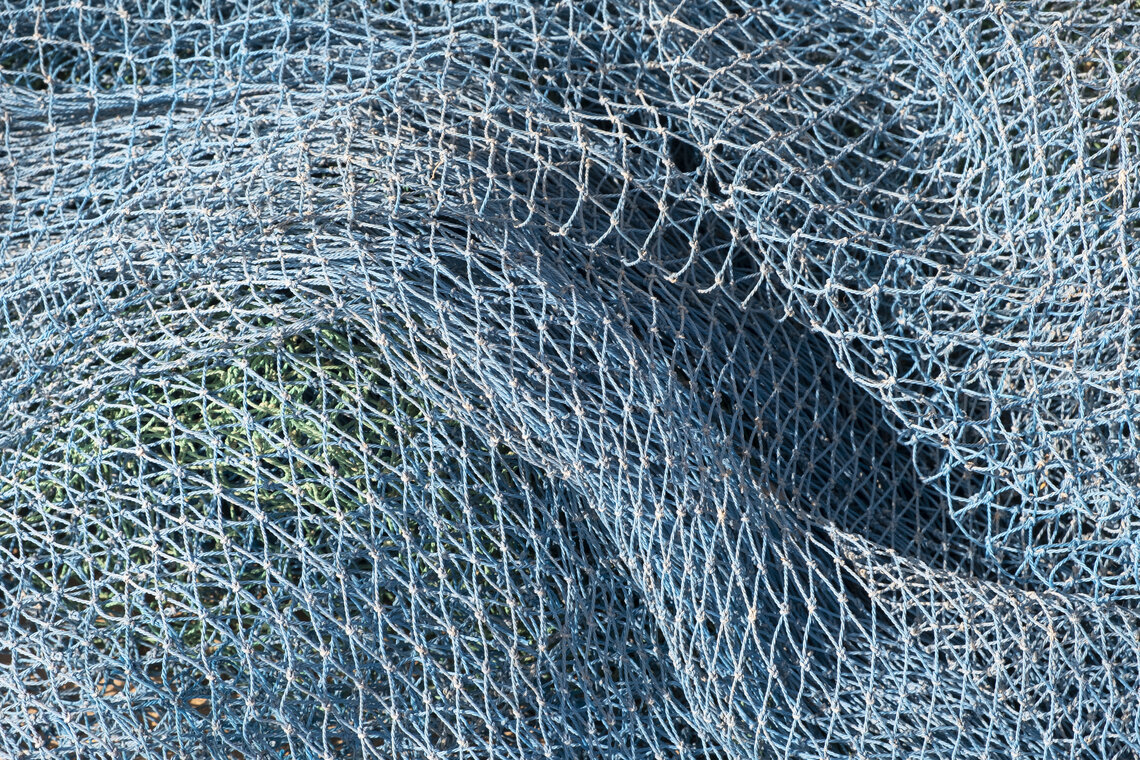
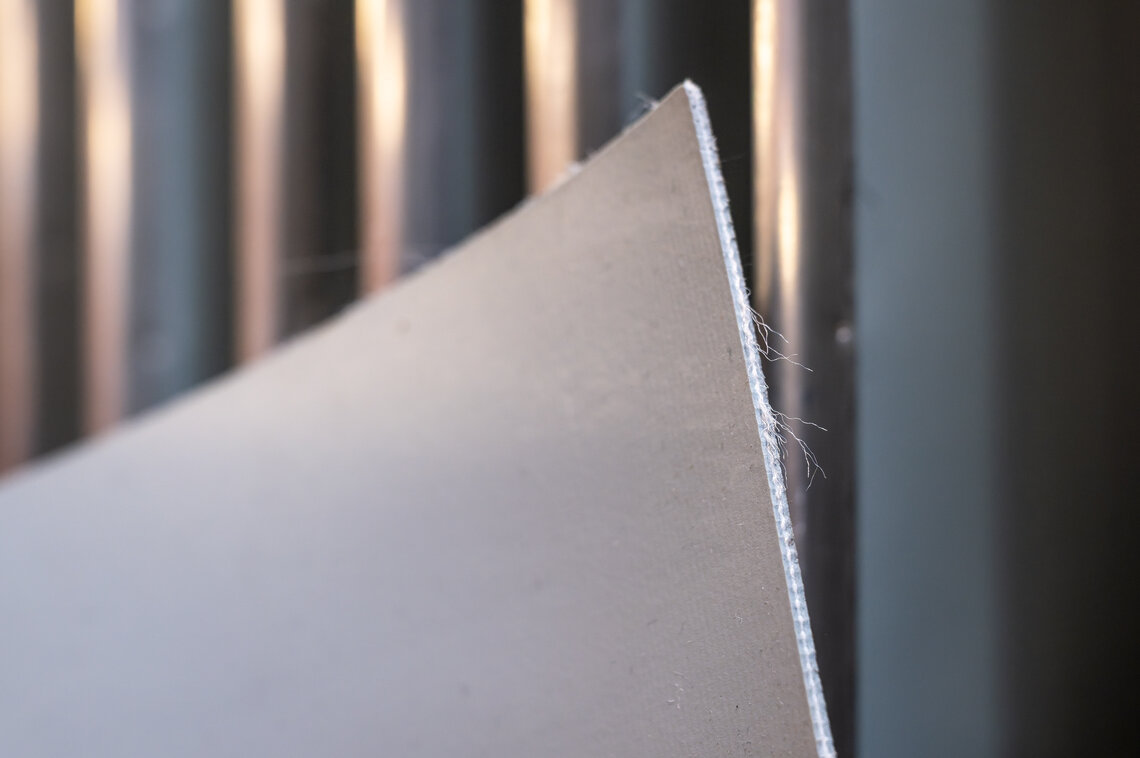
HÜBNER is working continuously to advance the development of sustainable material solutions. The company is setting new standards in the development of materials for folding and corrugated bellows through the use of innovative elastomer-coated textiles based on recycled polyamide yarns – for example from discarded fishing nets – as well as the use of alternative cellulose-based raw materials such as viscose.
The newly developed fabric HÜBNER EcoTex enables a reduction in CO₂ emissions during material production of up to 45% – with no use of solvents in the production process.
CO₂ footprint comparison
Sample calculation
| Material type | CO₂ footprint per product unit |
| Standard fabric | 32,013 g CO₂e |
| Recycled polyamie fabric | 16,850 g CO₂e |
These sustainable materials have been designed as fully equivalent replacements for conventional fabrics and fulfill the same technical and functional requirements. Combining environmental responsibility with high performance, they offer OEMs and transit operators a sustainable, future-proof alternative for use in rail applications.
Maximilian Schäfer
Head of Sales BU Gangways | Mobility Rail
Tel. +49 561 998 1679
Maximilian.Schaefer(@)hubner-group.com