

“1.60 meters bus” – a system in a new light
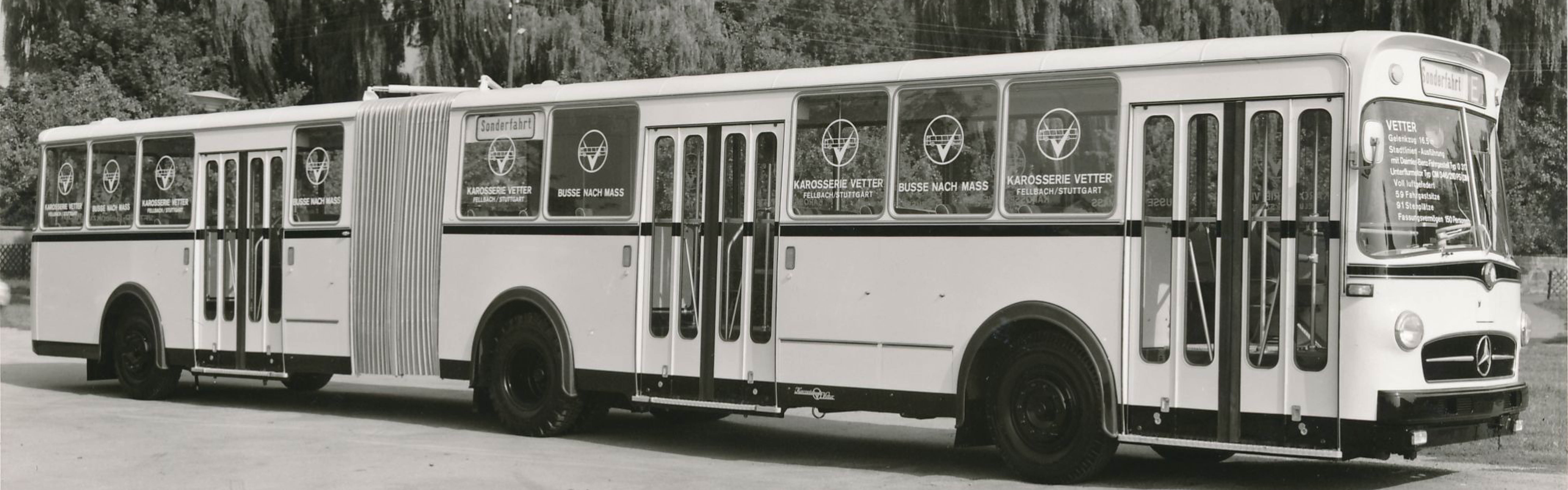
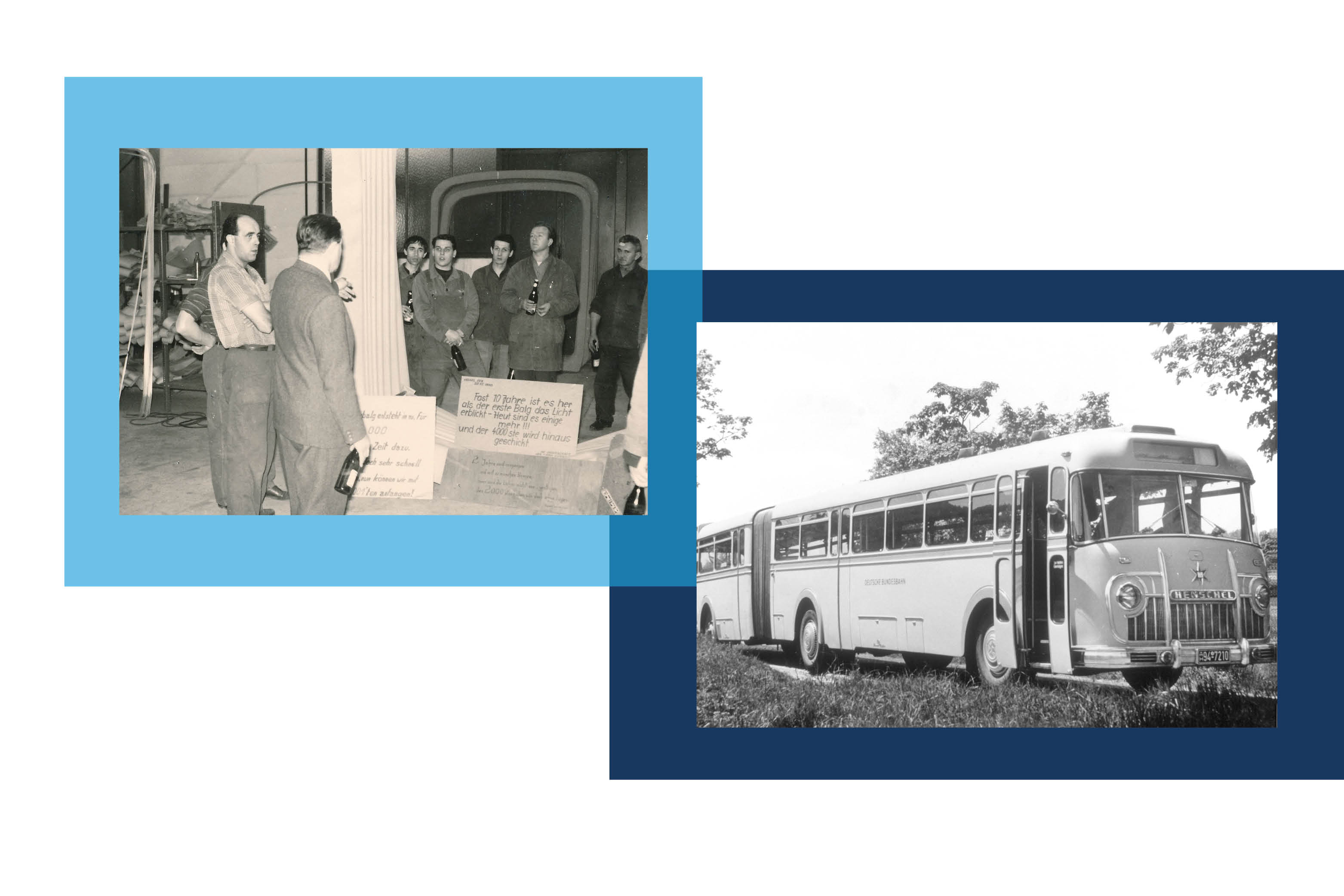
1.60 meters that move the world – for decades, HÜBNER has been developing gangway systems for articulated buses that are used by millions of passengers worldwide every day. What began in Kassel in 1952 with a bellow for Henschel’s first articulated bus is now an independent product area of international importance: robust, precise and an indispensable part of modern everyday life.
Natural light for the system
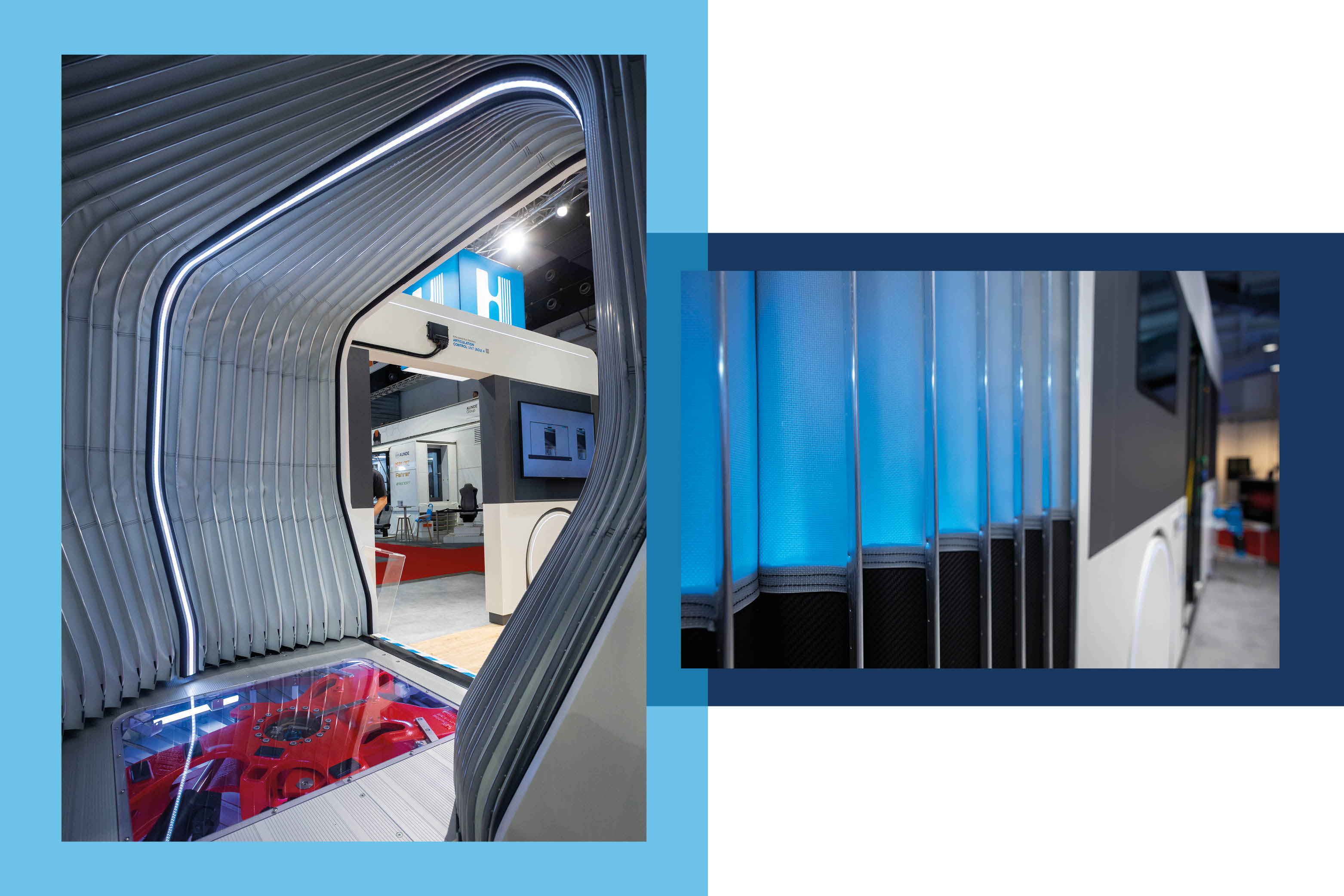
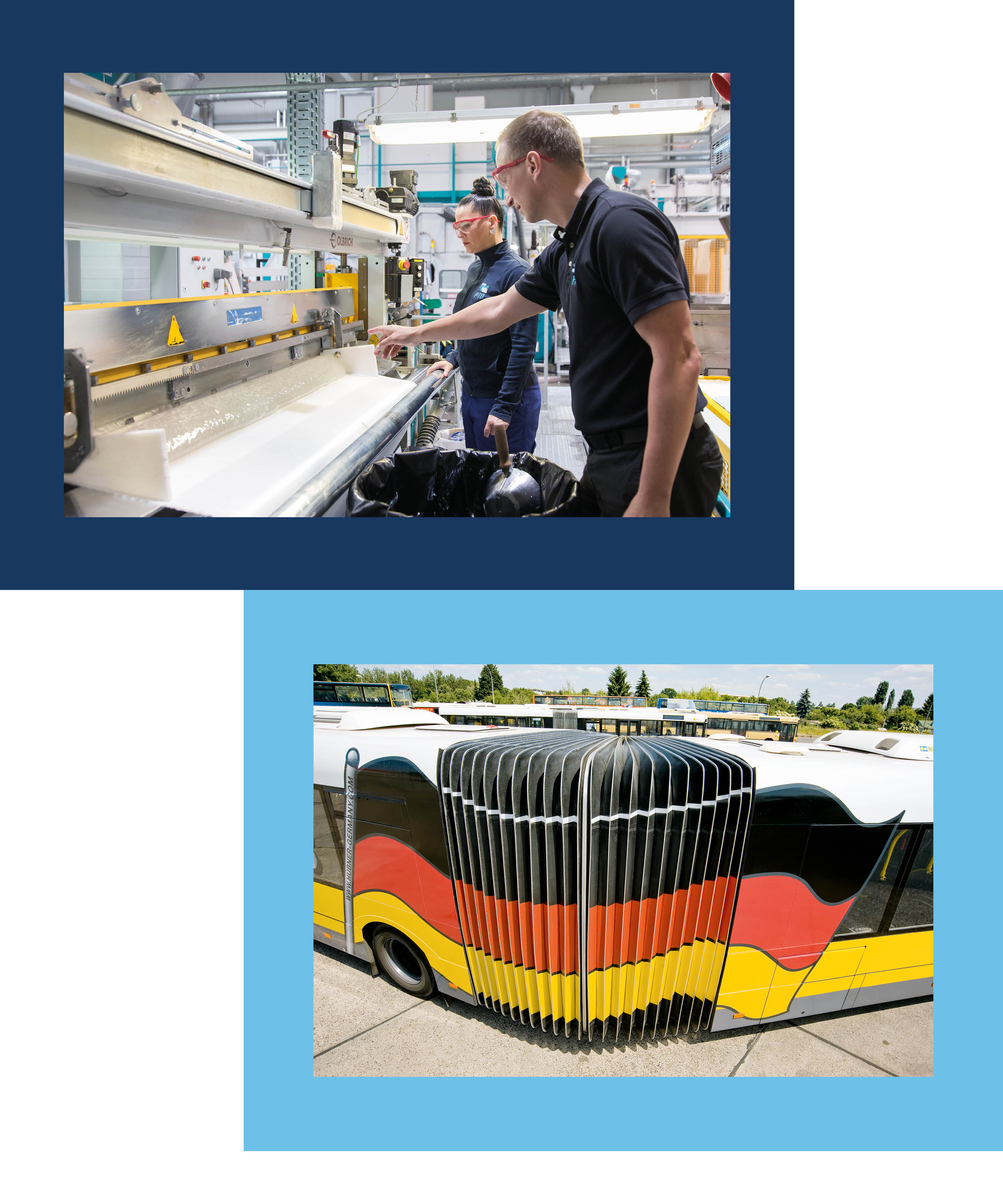
“1.60 meters of the bus” is the ready-to-install complete system from HÜBNER that connects the front and rear sections of an articulated bus – including the articulation system, bellows, energy supply system and joint control. Alongside the technical implementation, there is a growing emphasis on passenger comfort.
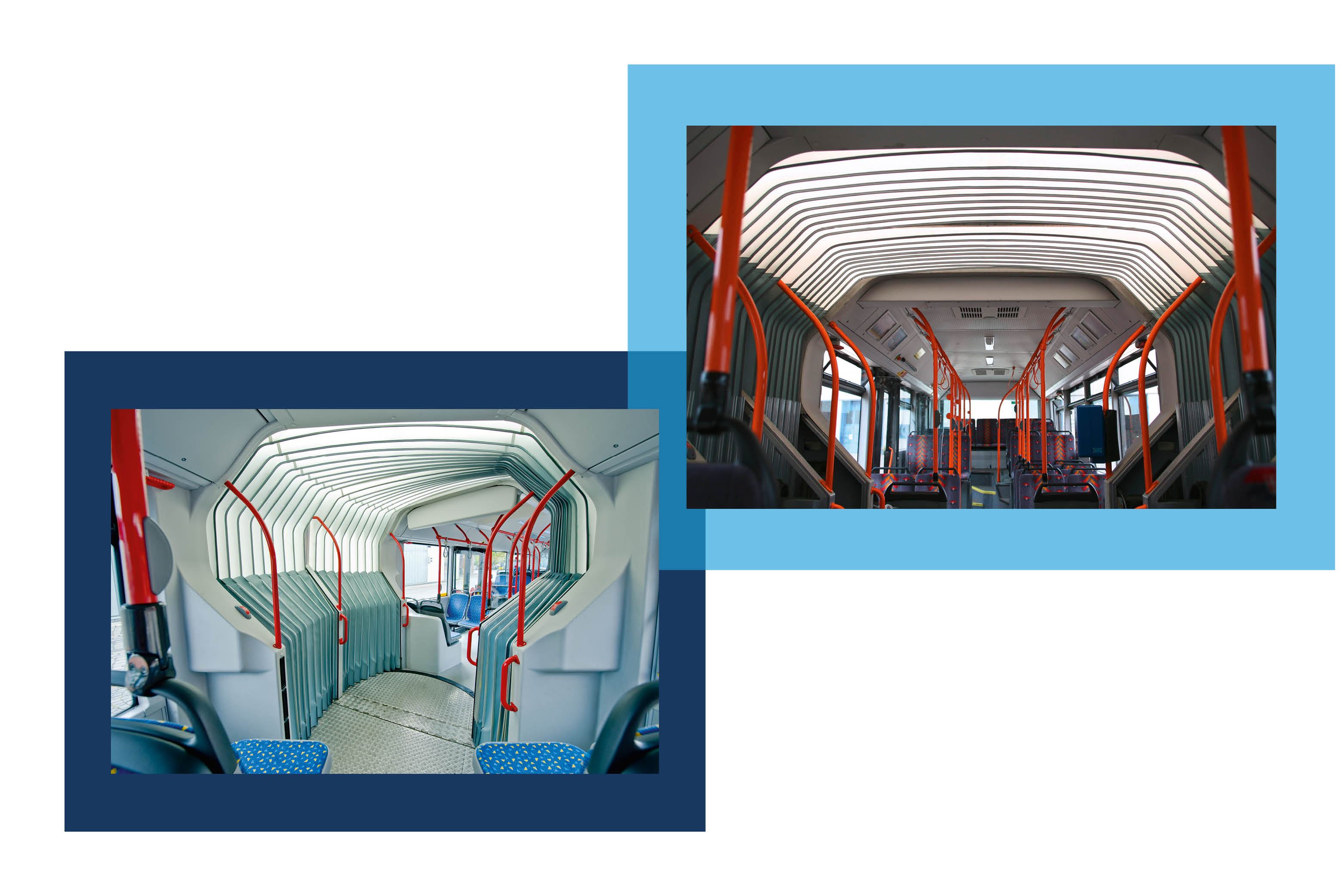
The gangway area between the car sections was not usually one of the preferred places to stay on a bus. This is exactly what HÜBNER set out to change. Andreas Stache, Team Leader Design & Development Bus Bellows in Kassel, remembers the initial situation: “For many passengers, this area was always very dark, which, depending on the ceiling height, could be a bit depressing. This resulted in the requirement for us to bring more brightness into it.”
Precision in partnership: HÜBNER and PTO
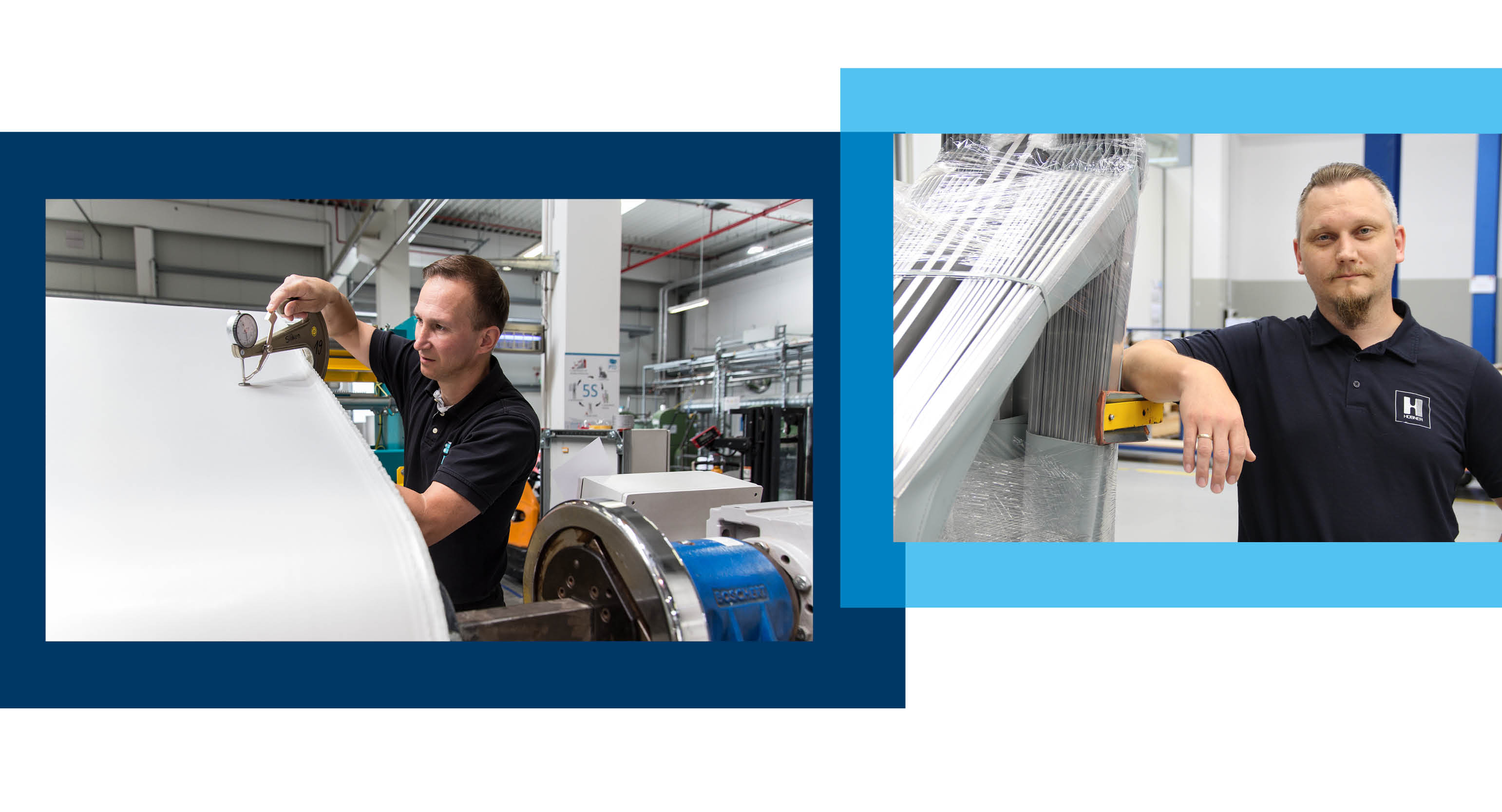
Forty years ago, HÜBNER introduced translucent bellows to the market for the first time, allowing more light into the gangway. Today, these special materials are produced in close cooperation with the coating specialist PTO PolymerTechnik Ortrand, an affiliated company of the HÜBNER Group. Stefan Hanisch, Head of Key Account Management Rail & Road at PTO, explains: “The development of bellow materials is always a team effort. Our sales colleagues bring us ideas from customers, which we then evaluate together with the road construction department and the R&D departments in Kassel and Ortrand. This enables us to develop something that meets customer requirements and can be placed on the market.”
What sounds so self-evident is highly demanding. Stefan Hanisch puts it in a nutshell: “This fabric is very challenging to produce. The product has a very narrow tolerance window, for example, in terms of thickness – attention must be paid to accuracy, cleanliness, and quality.” Only if this tight tolerance range is maintained will the coated fabric fit precisely into the aluminium profile of the bellows frame.
A material that performs better
Today, the translucent bellow fabric is based on silicone instead of PVC, is halogen-free and does not require halogenated flame retardants. “The translucency ensures that light can enter the gangway area and give passengers a pleasant, comfortable feeling there,” explains Stefan Hanisch.
The product overcomes familiar problems: susceptibility to cracking and a lack of UV protection are a thing of the past, and instead of a dark tunnel, a bright, inviting passageway is created. Tim Dortans, Vice President Global Sales Mobility Road at the HÜBNER Group, sees this as a particular strength: “The translucent bellows show how we work at HÜBNER: We listen carefully to what customers need – and then come up with solutions that are convincing on a technical level and improve the passenger experience.”
No two bellows are the same
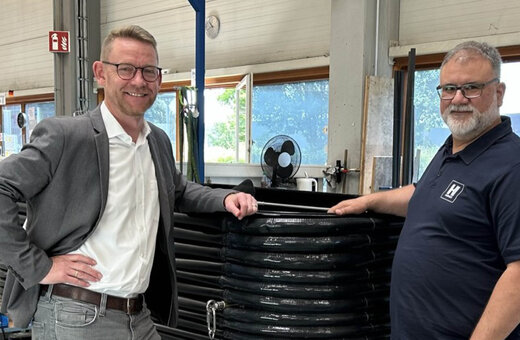
The translucent fabric also poses special challenges in production: the pull-out forces at the seams are lower than with standard materials, and the workers have to work with a different technique and longer seam hems. “The bellows structure is still a lot of manual work – beading, hammering, gluing. The worker needs a feeling for how much tension can – and must – be applied to the fabric,” says Andreas Stache.
This applies to every single bellow – because no two articulated buses are the same. Each manufacturer has its own contours to which the system is precisely adapted. 1.60 meters of the bus are not an off-the-shelf standard, but a system that fits precisely into the respective vehicle.
From craftsmanship to high-tech production
At the same time, production has developed fundamentally over the decades. Andreas Stache, who has been involved in this process at HÜBNER for around 25 years, describes the changes as follows: “Our site in Nyíregyháza, Hungary, can now bend packs of twelve – i.e. all the frames of an entire bellows at the same time. This significantly increases the accuracy of the bending results.” Stencils, previously drawn entirely by hand, have been created digitally since 2018 and are manufactured on a milling machine – precise, reproducible and usable for all plants worldwide.
Think long-term, grow together
For Andreas Stache, this work also has a dimension that goes beyond material and production: “I am always happy when I see an articulated bus somewhere in the world and think: That gangway is also from us. For a company of our size, this global presence is very special.” For him, the fact that such developments are possible is also due to HÜBNER as an employer – with long-term thinking, grown teams and personal development opportunities: “The opportunities HÜBNER offers its employees – that is something that really sets the company apart from others.”
Brighter, lighter, more sustainable
In addition to translucency, there is growing interest in new design variants – embossed surfaces such as the “carbon look” and coloured bellows. At the same time, PTO and HÜBNER are working on translucent fabrics based on Ecoflex: halogen-free, lighter, with even better properties. For Stefan Hanisch, one thing is clear: “In the future, sustainability, weight reduction and innovation in the direction of design combined with high-quality requirements will certainly play a central role.”
And perhaps one day future fabrics will glow all by themselves: “The fabric would then no longer necessarily be translucent in the true sense of the word, but the light could be introduced over the entire fabric surface,” explains Andreas Stache. More than seven decades after the first bellows, these1.60 meters of the bus are still a place of development.